Flashing, Pipe Boots, and Valleys: Common Leak Points on Marietta Roofs
A roof leak rarely starts in the middle of a wide, open field of shingles. Most of the time, water gets in where the roof changes direction, where one material meets another, or where something passes through the roof surface. That is why, when homeowners in Marietta notice a stain on a ceiling or damp drywall after a storm, the search often leads to the details rather than the broad planes.
Three of those details deserve special attention: flashing, pipe boots, and valleys. They are small compared to the rest of the roof, but they handle some of the hardest work. They shed water, redirect runoff, and protect openings that would otherwise let moisture straight into the house. When they are installed poorly, loosen over time, or are damaged by wind or hail, leaks can follow.
That matters here because Georgia weather is not gentle on roofs. Wind-driven rain tests every seam. Hail can damage roof coverings and shorten roof life. Heavy runoff races downhill and concentrates in specific channels. A roof may look fine from the street and still have one vulnerable area that lets in enough water to stain a bedroom ceiling or rot roof decking over time.
For homeowners, the hard part is that leak symptoms and leak sources often do not line up neatly. Water can enter high on the roof and travel before it shows itself indoors. A wet spot around a fireplace, in a hallway, or near a bathroom vent does not automatically tell you the exact point of entry. Good roof leak repair starts with understanding how water behaves and where roofs are most likely to fail.
Why leaks cluster around details
Roofs are designed as water-shedding systems. That phrase matters. A steep-slope roof does not work by being one giant waterproof lid. It works by layering materials so water flows over and away from the home. Shingles play a role, but so do underlayment and flashing. FEMA guidance emphasizes that flashing must be integrated with shingles and underlayment to keep water out. When that integration is wrong, even good shingles can be undermined.
That is why experienced leak tracing almost always begins at transitions. If two roof planes meet, if a wall intersects the roof, if a vent pipe penetrates the system, or if a metal component has lifted or separated, that area deserves attention. These are not cosmetic details. They are functional joints, and joints are where systems usually fail first.
In Marietta, that reality becomes even more important after severe weather. Georgia’s insurance regulator advises homeowners to photograph damage, notify their insurer promptly, tarp a damaged roof if it is safe to do so, and avoid rushed agreements with unsolicited contractors. That guidance exists for a reason. After a storm, leaks may start at a single loosened detail that seems minor from the ground but worsens quickly once rain returns.
Flashing does the quiet work
Flashing is one of those roofing terms that homeowners hear often, but many do not fully picture until there is a problem. In simple terms, flashing is the material used where the roof needs extra protection at joints and intersections. It helps direct water away from places where shingles alone are not enough.
IBHS guidance highlights flashing and valley flashing as key water-shedding details. It also notes that poorly installed or loosened flashing can allow water infiltration. That lines up with what roofers see in the field. A roof can have years of life left in the main covering and still leak because one flashing detail failed.
Around chimneys, roof-to-wall transitions, dormers, and similar intersections, flashing has to do more than sit in place. It has to be integrated correctly with the roof system so water flows across it and off the roof rather than under it. When that sequence is wrong, water follows the path of least resistance. Sometimes that path stays hidden for a while. Homeowners may first notice a faint yellow-brown ceiling mark after one storm, then a darker spot after the next, then paint bubbling a month later.
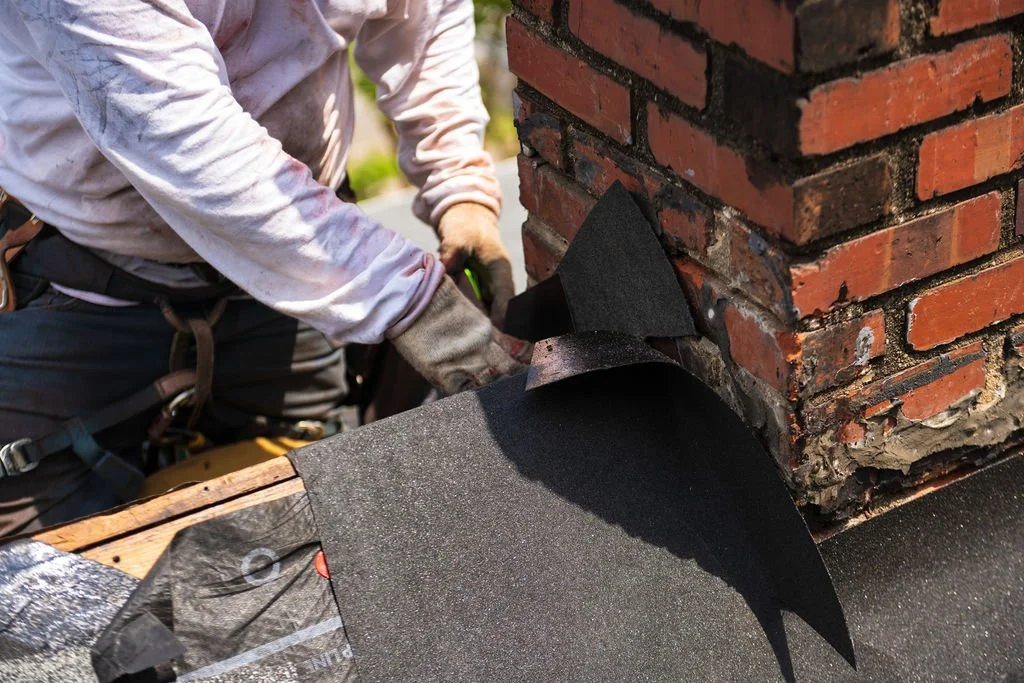
The trouble with https://southlocalbusiness.blob.core.windows.net/my-home-blog/storm-and-hail-roof-damage-in-marietta-what-to-do.html flashing problems is that they can be deceptively small. A gap that looks insignificant to an untrained eye can admit a surprising amount of water under wind-driven rain. Once moisture is inside, it does not need a dramatic opening to cause damage. Repeated wetting is enough.
A reliable roofing contractor will not treat flashing as an accessory item. It is central to the roof’s performance. If someone focuses only on replacing a few shingles without evaluating the nearby flashing, there is a real chance the leak will return. That kind of partial fix is one reason homeowners feel like they have repaired the same leak twice.
Pipe boots are small, but they protect real openings
Pipe boots sit around roof penetrations, commonly vent pipes, and they deserve far more attention than they usually get. Homeowners often do not think about them at all until a leak appears near a bathroom, laundry room, or hallway. Yet a pipe penetration is exactly what it sounds like: an opening through the roof system that must be sealed and protected while still allowing the pipe to pass through.
That makes pipe boots a specialized version of the same principle behind flashing. They are there to help the roof shed water around a vulnerable point. If that protective detail loosens, deteriorates, or was not integrated properly in the first place, water has an easy route inward.
What makes pipe-boot leaks frustrating is that the symptoms can seem random. A stain may appear around a vent stack area, but not immediately after every rain. Wind direction can change how water hits the roof. One storm may pass with no visible issue, while another, with harder rain or stronger gusts, exposes the weakness. That inconsistency leads some homeowners to delay calling for roof repair because the leak seems to have “fixed itself.” It usually has not.
On many homes, pipe penetrations are not dramatic features. They are easy to overlook from the yard and easy to underestimate during a quick inspection. But from a leak-detection standpoint, they belong high on the checklist. When a roofer traces a leak, these penetrations often get careful scrutiny precisely because they interrupt the roof surface.
If you own a home in Marietta and notice staining near interior areas served by plumbing vents, mention that when you call. It does not prove the pipe boot is the source, but it gives the roofing contractor a useful clue. Good leak repair is part detective work. The more specific the observations, the better.
Valleys handle more water than almost any other area
If flashing and pipe boots protect interruptions, valleys manage concentration. A valley is where two roof planes meet and create a channel. All the water that lands on both roof sections drains toward that line. That means valleys carry a heavier load than most parts of the roof.
IBHS points out that valleys are common leak points because they concentrate runoff. That is one of the most useful things a homeowner can understand about roof leaks. Water does not fall evenly and harmlessly off every part of the roof. It gathers. It speeds up. It follows gravity to low lines and edges. Valleys are natural collection points, and because of that they must be detailed carefully.
When a valley leaks, the interior symptoms may appear well away from the valley itself. Water can run along framing members or roof decking before it becomes visible on a ceiling. That can send people looking in the wrong place. I have seen homeowners become convinced a skylight or a pipe vent was leaking, only to learn the real culprit was uphill in a valley handling runoff from a much larger section of roof.
Valleys also get less grace than open field shingles. A few misplaced or damaged components in a high-flow area matter more than the same issue elsewhere. Heavy runoff exposes small weaknesses quickly. Add storm debris, hail impact, or flashing movement, and a valley can become the first place a roof gives up water.
Because valleys are so important, they are one of the first places a skilled roofer studies during leak tracing after severe weather. Not every problem can be diagnosed from the ground. Some conditions only become obvious through a close inspection. That is one reason it pays to call someone who understands water pathways rather than someone who simply looks for missing shingles and stops there.
What Marietta weather does to roof details
Marietta roofs live under the same broad Georgia storm patterns that put stress on homes across the state. Wind, hail, and heavy rain are not rare events. IBHS research underscores that hail can damage roof coverings and shorten roof life, and that wind and hail commonly damage roofs and lead to water intrusion.
That stress tends to reveal weaknesses at detail points first. A broad roof surface may weather a storm with little visible change, while a loosened flashing edge or vulnerable valley detail becomes the actual entry point for rain. A roof does not need catastrophic damage to leak. Sometimes it only needs one compromised transition.
After strong weather, homeowners often want immediate certainty: Is this an insurance claim, a simple repair, or a full replacement issue? The honest answer is that it depends on what the inspection shows. FEMA notes that disaster-caused roof and ceiling damage from leaks may be eligible for assistance in some cases, but verification is typically done through on-site inspection. The common thread is inspection. Leaks need eyes on them.
That is also why rushing into a repair agreement can backfire. Georgia’s insurance regulator specifically warns homeowners to be cautious with unsolicited or high-pressure contractors after severe weather. A real assessment should involve documenting visible damage, considering how water may have traveled, and matching the repair approach to the actual condition of the roof.
The leak you see is not always the leak you have
One of the biggest misconceptions in roof leak repair is that the stain tells the whole story. It rarely does. Water is patient and opportunistic. Once it gets beneath the roof covering, it can move sideways, downhill, or along hidden surfaces before it finds a place to drip.
A ceiling stain in an upstairs bedroom might be caused by flashing at a wall intersection higher up. Dampness near a vent might come from the penetration itself, or from a valley nearby that channels enough water to overwhelm a weak point. A spot that seems to line up with one roof feature from inside may have little to do with it.
That is why experienced roofers ask questions that seem oddly specific. When did you first notice it? Did it happen during wind-driven rain or a steady all-day rainfall? Is it worse after severe storms? Did the area drip once or repeatedly? These details help narrow the possibilities.
A careful inspection also keeps the repair honest. If the issue is limited to a flashing detail or a penetration seal, the solution may be targeted. If storm damage is more widespread, the recommendation may be broader. Either way, the goal is to solve the source, not just hide the symptom.
Choosing the right roofing contractor in Georgia
Not every person offering roof repair is operating on the same footing. In Georgia, residential and commercial general contractor services performed for compensation require state licensure, and the state has specific categories for residential-basic, residential-light commercial, and general contracting work. Licensing rules include requirements tied to experience, competency, age, and examination. The state also ties licensure to insurance, and in commercial general contracting there are additional knowledge expectations that include areas such as building codes, estimating, insurance, surety bonding, and liens.
For a homeowner, the practical takeaway is simple: credentials matter. When you hire a roofing contractor to evaluate a leak or storm damage, you want someone who understands more than patch material. You want someone who can assess the condition, explain what they found, and handle the job within Georgia’s rules.
Marietta also has its own permitting framework. The city requires permits for new construction, temporary buildings, and certain alterations to existing construction, and Marietta and Cobb County enforce current Georgia building codes. Not every leak fix triggers the same paperwork, but any contractor working on your roof should understand when permit compliance applies and how local requirements affect the job.
That local knowledge matters more than many homeowners realize. A contractor who knows the area should be prepared to deal with storm-damage assessment, leak tracing, and permit questions rather than brushing them aside.
Here are a few sensible questions to ask before you commit to roof leak repair:
- Are you properly licensed for the work you are performing in Georgia?
- Have you identified the likely leak source, not just the interior symptom?
- Will this repair involve any permit or code compliance issues in Marietta?
- How will you document storm-related damage if insurance is involved?
- What is the difference between the immediate stop-the-leak step and the permanent repair?
Those questions do not make a homeowner difficult. They make the process clearer. The better the answers, the more confidence you can have that the repair plan is grounded in real inspection rather than guesswork.
What to do right after you notice a leak
The first few hours matter. Panic does not help, but speed does. Water damage spreads, and a small leak can become a larger interior repair if it is ignored through the next rain.
Georgia’s insurance regulator offers practical guidance after severe weather, and it is solid advice even for smaller leak events. Focus on safety, documentation, and protecting the home from further damage if you can do so safely.
A sensible first response looks like this:
- Photograph the visible damage inside and outside, if the exterior can be viewed safely.
- Notify your insurer promptly if the leak appears related to storm damage.
- Tarp the damaged roof only if it is safe to do so.
- Move belongings away from active drips and catch water where possible.
- Avoid signing hurried agreements with unsolicited contractors.
That short list covers the basics without getting ahead of the facts. The roof still needs an inspection, but early photos and prompt notice can help preserve a clean record of what happened.
Repairing details versus replacing systems
Homeowners understandably want a simple rule. If a leak is around flashing, replace the flashing. If it is near a valley, repair the valley. In practice, the right decision depends on condition, extent, and context.
A single compromised detail can sometimes be addressed with a focused repair. That is often the best outcome. But detail failures also have a way of exposing larger problems. If one valley is leaking because storm damage affected a broader area, or if multiple flashing points show age or poor integration, a piecemeal approach may not hold up for long.
This is where judgment matters. Good roof repair is not about doing the most work possible. It is about doing the right amount of work. A trustworthy contractor should be able to explain whether the leak appears isolated or symptomatic of a larger issue. If the recommendation sounds oversized, ask what evidence supports it. If it sounds too easy, ask how they ruled out surrounding details.
The strongest repair plans are specific. They identify the probable entry point, explain how water moved, and connect the fix to the roof’s water-shedding design. That is especially important with flashing and valleys, where proper integration with shingles and underlayment is not optional. FEMA’s guidance on that point is clear, and the field experience backs it up. These details either work as part of the system, or they do not.
A small detail can decide whether a roof stays dry
Most leaks in Marietta homes do not come down to dramatic roof failure. They come down to details under stress. Flashing that should direct water away. Pipe boots that must protect penetrations. Valleys that carry concentrated runoff and cannot afford mistakes.
When those elements are installed correctly and remain secure, they quietly do their job for years. When they loosen, age, or take storm damage, they become the spots where a roof starts telling on itself.
If you have seen a ceiling stain, heard dripping during a storm, or noticed signs of water after hail or high wind, it is worth having the roof inspected with those details in mind. Smart roof leak repair is rarely about guessing. It is about tracing water to the places where roofs are most vulnerable, then fixing the real problem before a minor leak becomes a major interior headache.